
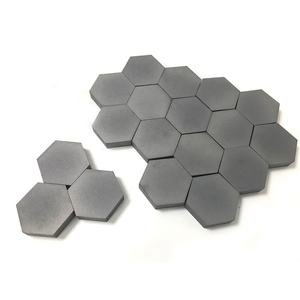
When designers discuss products that can endure where steel melts and glass vaporizes, Silicon Carbide ceramics are frequently on top of the checklist. This is not an odd laboratory interest; it is a material that quietly powers markets, from the semiconductors in your phone to the brake discs in high-speed trains. What makes Silicon Carbide porcelains so impressive is not simply a listing of buildings, however a combination of extreme firmness, high thermal conductivity, and unusual chemical durability. In this post, we will discover the scientific research behind these high qualities, the ingenuity of the production procedures, and the wide range of applications that have actually made Silicon Carbide ceramics a cornerstone of contemporary high-performance design
1. The Atomic Design of Strength

(Silicon Carbide Ceramics)
To understand why Silicon Carbide porcelains are so tough, we need to start with their atomic framework. Silicon carbide is a substance of silicon and carbon, arranged in a latticework where each atom is securely bound to 4 next-door neighbors in a tetrahedral geometry. This three-dimensional network of solid covalent bonds provides the product its hallmark properties: high firmness, high melting factor, and resistance to contortion. Unlike steels, which have cost-free electrons to lug both electrical energy and heat, Silicon Carbide is a semiconductor. Its electrons are much more securely bound, which means it can conduct power under certain conditions yet stays a superb thermal conductor via resonances of the crystal lattice, referred to as phonons
One of one of the most interesting facets of Silicon Carbide porcelains is their polymorphism. The exact same fundamental chemical structure can crystallize right into many different structures, known as polytypes, which vary only in the stacking series of their atomic layers. The most typical polytypes are 3C-SiC, 4H-SiC, and 6H-SiC, each with slightly various digital and thermal homes. This versatility enables materials researchers to choose the perfect polytype for a particular application, whether it is for high-power electronics, high-temperature structural parts, or optical devices
Another essential attribute of Silicon Carbide porcelains is their strong covalent bonding, which leads to a high elastic modulus. This implies that the product is very rigid and stands up to flexing or extending under lots. At the very same time, Silicon Carbide porcelains exhibit impressive flexural strength, usually getting to a number of hundred megapascals. This mix of stiffness and toughness makes them perfect for applications where dimensional security is important, such as in precision machinery or aerospace parts
2. The Alchemy of Manufacturing
Producing a Silicon Carbide ceramic element is not as basic as baking clay in a kiln. The procedure begins with the production of high-purity Silicon Carbide powder, which can be synthesized with different approaches, consisting of the Acheson process, chemical vapor deposition, or laser-assisted synthesis. Each technique has its benefits and constraints, but the goal is constantly to produce a powder with the ideal particle dimension, form, and purity for the desired application
When the powder is prepared, the following step is densification. This is where the genuine obstacle exists, as the strong covalent bonds in Silicon Carbide make it difficult for the particles to move and pack together. To overcome this, makers use a variety of techniques, such as pressureless sintering, warm pushing, or trigger plasma sintering. In pressureless sintering, the powder is warmed in a furnace to a heat in the visibility of a sintering help, which assists to decrease the activation energy for densification. Warm pressing, on the other hand, applies both warmth and stress to the powder, permitting faster and extra full densification at lower temperature levels
One more ingenious approach is the use of additive production, or 3D printing, to produce complicated Silicon Carbide ceramic components. Strategies like digital light handling (DLP) and stereolithography enable the exact control of the sizes and shape of the end product. In DLP, a photosensitive resin including Silicon Carbide powder is cured by exposure to light, layer by layer, to build up the preferred form. The published part is after that sintered at heat to remove the material and compress the ceramic. This technique opens up brand-new opportunities for the manufacturing of elaborate parts that would be tough or difficult to use typical techniques
3. The Several Faces of Silicon Carbide Ceramics
The special residential properties of Silicon Carbide porcelains make them suitable for a wide range of applications, from daily customer products to advanced technologies. In the semiconductor sector, Silicon Carbide is utilized as a substrate material for high-power digital devices, such as Schottky diodes and MOSFETs. These tools can run at greater voltages, temperature levels, and regularities than standard silicon-based devices, making them excellent for applications in electrical lorries, renewable resource systems, and smart grids
In the area of aerospace, Silicon Carbide ceramics are used in components that must withstand severe temperatures and mechanical tension. As an example, Silicon Carbide fiber-reinforced Silicon Carbide matrix compounds (SiC/SiC CMCs) are being created for use in jet engines and hypersonic automobiles. These products can operate at temperatures exceeding 1200 levels celsius, providing considerable weight savings and improved efficiency over conventional nickel-based superalloys
Silicon Carbide porcelains also play a critical role in the production of high-temperature furnaces and kilns. Their high thermal conductivity and resistance to thermal shock make them excellent for elements such as burner, crucibles, and heating system furnishings. In the chemical processing sector, Silicon Carbide ceramics are utilized in tools that has to resist deterioration and wear, such as pumps, shutoffs, and warm exchanger tubes. Their chemical inertness and high solidity make them perfect for managing aggressive media, such as molten steels, acids, and alkalis
4. The Future of Silicon Carbide Ceramics
As research and development in materials scientific research continue to development, the future of Silicon Carbide ceramics looks appealing. New manufacturing strategies, such as additive manufacturing and nanotechnology, are opening up brand-new possibilities for the production of complicated and high-performance parts. At the very same time, the growing demand for energy-efficient and high-performance technologies is driving the fostering of Silicon Carbide ceramics in a wide range of markets
One location of certain interest is the advancement of Silicon Carbide ceramics for quantum computer and quantum noticing. Particular polytypes of Silicon Carbide host defects that can work as quantum little bits, or qubits, which can be controlled at area temperature level. This makes Silicon Carbide an encouraging system for the advancement of scalable and practical quantum technologies
One more amazing development is using Silicon Carbide ceramics in sustainable energy systems. For instance, Silicon Carbide porcelains are being made use of in the manufacturing of high-efficiency solar cells and gas cells, where their high thermal conductivity and chemical stability can enhance the performance and long life of these devices. As the globe remains to relocate in the direction of a more sustainable future, Silicon Carbide porcelains are most likely to play a significantly important function
5. Final thought: A Product for the Ages
( Silicon Carbide Ceramics)
To conclude, Silicon Carbide porcelains are a remarkable class of materials that combine severe firmness, high thermal conductivity, and chemical durability. Their special buildings make them ideal for a large range of applications, from day-to-day consumer items to innovative technologies. As research and development in products scientific research continue to breakthrough, the future of Silicon Carbide porcelains looks encouraging, with brand-new production strategies and applications arising constantly. Whether you are a designer, a scientist, or merely a person who appreciates the marvels of modern materials, Silicon Carbide ceramics are sure to remain to surprise and influence
6. Provider
Advanced Ceramics founded on October 17, 2012, is a high-tech enterprise committed to the research and development, production, processing, sales and technical services of ceramic relative materials and products. Our products includes but not limited to Boron Carbide Ceramic Products, Boron Nitride Ceramic Products, Silicon Carbide Ceramic Products, Silicon Nitride Ceramic Products, Zirconium Dioxide Ceramic Products, etc. If you are interested, please feel free to contact us.
Tags: Silicon Carbide Ceramics, Silicon Carbide Ceramic, Silicon Carbide
All articles and pictures are from the Internet. If there are any copyright issues, please contact us in time to delete.
Inquiry us