
1. Material Attributes and Structural Style
1.1 Composition and Crystalline Phases of Alumina
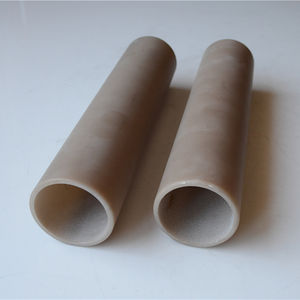
( Alumina Ceramic Tubes)
Alumina (Al ₂ O ₃) ceramic tubes are mainly made from high-purity light weight aluminum oxide, with pureness levels commonly ranging from 90% to 99.8%, depending on the desired application.
The dominant crystalline stage in totally dense, high-temperature sintered tubes is α-alumina (corundum), which displays a trigonal crystal framework and extraordinary thermodynamic security.
This stage shift from precursor hydroxides (e.g., boehmite or gibbsite) to α-alumina takes place over 1100 ° C and leads to a dense, interlacing microstructure that offers outstanding mechanical strength and chemical resistance.
Greater purity grades (≥ 99.5%) make best use of firmness, use resistance, and dielectric performance, while lower-purity solutions might include secondary stages like mullite or glazed grain limit phases to minimize expense or tailor thermal development.
The capability to control grain size, porosity, and stage composition during handling permits engineers to tweak alumina tubes for certain practical demands throughout varied commercial domains.
1.2 Mechanical, Thermal, and Electric Properties
Alumina ceramic tubes show an one-of-a-kind combination of physical properties that make them indispensable popular engineering settings.
With a Vickers firmness going beyond 1500 HV, they are highly resistant to abrasion and disintegration, exceeding most steels and polymers in wear-prone systems.
Their compressive stamina can reach 2000 MPa, enabling architectural use under high mechanical tons, while flexural stamina usually varies from 300 to 500 MPa, depending upon thickness and surface coating.
Thermally, alumina maintains security up to 1700 ° C in oxidizing ambiences, with a reduced coefficient of thermal growth (~ 8 ppm/K), contributing to superb thermal shock resistance when correctly developed.
Although its thermal conductivity (~ 30 W/(m · K)) is modest compared to metals or aluminum nitride, it is sufficient for lots of high-temperature applications where electrical insulation and structural integrity are focused on.
Electrically, alumina is an outstanding insulator with quantity resistivity > 10 ¹⁴ Ω · centimeters and high dielectric strength (> 15 kV/mm), making it perfect for electrical feedthroughs, sensing unit housings, and high-voltage insulation.
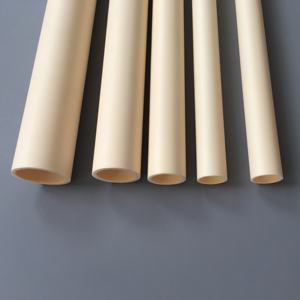
( Alumina Ceramic Tubes)
2. Manufacturing Processes and Dimensional Control
2.1 Shaping and Developing Methods
The manufacturing of alumina ceramic tubes includes innovative forming methods customized to accomplish accurate dimensions, wall thickness harmony, and surface quality.
Common strategies include extrusion, isostatic pushing, and slide casting, each fit to different dimension varieties and performance demands.
Extrusion is widely utilized for long, straight tubes with regular cross-sections, where a plasticized alumina paste is required via a die and cut to size before drying and sintering.
For high-precision or thin-walled tubes, chilly isostatic pressing (CIP) applies uniform pressure from all instructions to portable environment-friendly bodies, minimizing distortion and boosting thickness homogeneity.
Slide casting, including the deposition of a colloidal alumina suspension (slip) onto a permeable plaster mold, is perfect for facility or large-diameter geometries with variable wall thickness.
After developing, tubes go through cautious drying to avoid cracking, complied with by binder exhaustion and high-temperature sintering (1500– 1650 ° C )to achieve full densification and dimensional stability.
2.2 Ending Up and Quality Assurance
Post-sintering operations such as centerless grinding, lapping, and brightening are employed to attain tight tolerances, smooth surface area coatings, and precise internal and outer sizes.
Resistances as tight as ± 0.01 mm are possible for essential applications in semiconductor handling or analytical instrumentation.
Surface roughness can be minimized to Ra < 0.1 µm, minimizing fragment trapping and improving compatibility with ultra-high vacuum cleaner (UHV) or cleanroom atmospheres.
Non-destructive screening approaches– consisting of ultrasonic examination, X-ray radiography, and dye penetrant screening– guarantee architectural integrity and absence of splits or gaps.
Dimensional width utilizing coordinate measuring devices (CMM) or laser scanning confirms compliance with design specifications, particularly for custom or high-volume production runs.
3. Practical Performance in Harsh Environments
3.1 Resistance to Thermal and Chemical Degradation
Among the most engaging benefits of alumina ceramic tubes is their ability to stand up to severe thermal and chemical problems where metals and polymers fall short.
They continue to be dimensionally secure and mechanically robust in continuous service at temperatures over 1500 ° C, making them appropriate for heating system linings, thermocouple security sheaths, and radiant heating unit tubes.
Their inertness to thaw metals (e.g., light weight aluminum, zinc, and non-ferrous alloys), liquified salts, and many acids (except hydrofluoric and warm phosphoric acid) makes it possible for usage in metallurgical and chemical handling equipment.
In oxidizing and minimizing atmospheres, alumina does not break down or militarize undesirable reactions, protecting process purity in semiconductor and glass production.
This chemical inertness also prevents contamination in high-purity liquid taking care of systems, including those utilized in pharmaceutical and food processing markets.
3.2 Electrical Insulation and Plasma Resistance
In electrical and plasma atmospheres, alumina tubes work as shielding barriers that maintain circuit stability under high voltage and elevated temperature level.
They are used in high-intensity discharge (HID) lamps, where they include ionized gases at temperatures surpassing 1000 ° C while holding up against electric potentials of several kilovolts.
In plasma etching and deposition systems, alumina tubes serve as dielectric windows or gas distribution elements, standing up to ion barrage and thermal cycling without fracturing or outgassing.
Their low dielectric loss and high arc resistance protect against electric monitoring and breakdown, ensuring lengthy life span in switchgear and power transmission parts.
These residential properties are important in keeping procedure security and equipment integrity in sophisticated manufacturing and power systems.
4. Industrial and Arising Applications
4.1 High-Temperature and Industrial Processing Solutions
Alumina ceramic tubes are important to a large range of commercial procedures that require longevity under severe conditions.
In thermal processing, they serve as protective sheaths for thermocouples and burner in kilns, furnaces, and warm treatment devices, shielding sensitive components from harsh environments and mechanical wear.
In liquid handling, they transfer hostile chemicals, slurries, and high-temperature gases in petrochemical refineries, desalination plants, and waste incineration systems.
Their resistance to thermal shock permits rapid home heating and cooling down cycles without failing, an essential advantage in cyclic industrial procedures.
In glass production, alumina tubes lead molten glass flows and support forming devices, withstanding disintegration from thick, high-temperature melts.
4.2 Advanced Technologies and Future Combination
Past standard commercial usages, alumina tubes are finding brand-new duties in cutting-edge modern technologies.
In semiconductor fabrication, ultra-pure alumina tubes are used in chemical vapor deposition (CVD) activators and ion implantation systems, where fragment generation and metallic contamination need to be reduced.
In medical tools, biocompatible alumina tubes act as shielding components in medical tools, oral implants, and analysis sensors.
Study is checking out functionalized alumina tubes with ingrained sensing units or conductive traces for smart structural tracking in aerospace and power systems.
Additive production (3D printing) of alumina is becoming a method to generate complicated tube geometries with internal channels or graded compositions, making it possible for next-generation heat exchangers and microreactors.
As markets press towards greater efficiency, cleaner procedures, and higher dependability, alumina ceramic tubes remain to advance as enabling parts in the framework of modern-day innovation.
In summary, alumina ceramic tubes stand for a mature yet dynamically advancing class of engineered products, combining exceptional thermal, mechanical, and electrical efficiency in a solitary inorganic avenue.
Their convenience across extreme environments guarantees their ongoing relevance in both established industrial systems and emerging modern applications.
5. Supplier
Advanced Ceramics founded on October 17, 2012, is a high-tech enterprise committed to the research and development, production, processing, sales and technical services of ceramic relative materials and products. Our products includes but not limited to Boron Carbide Ceramic Products, Boron Nitride Ceramic Products, Silicon Carbide Ceramic Products, Silicon Nitride Ceramic Products, Zirconium Dioxide Ceramic Products, etc. If you are interested, please feel free to contact us.
Tags: Alumina Ceramic Tubes, alumina tubes sizes, alumina tube
All articles and pictures are from the Internet. If there are any copyright issues, please contact us in time to delete.
Inquiry us